Home » Support and Guides » Write a 30-Minute Press Release
Write a 30‑Minute Press Release That Wins Local Media Coverage

Anna I
May 12, 2026
Write a 30-Minute Press Release
A common mistake is starting a press release with background fluff instead of the actual news. Journalists scan fast. If your lead buries the who-what-when-where-why, they move on. That wastes your time and theirs, and it kills coverage before you’ve had a chance.
This short guide helps you write a 30‑minute press release that editors will read and local media will pick up. Below are four common mistakes and simple fixes you can apply right away. Read calmly, act quickly, and you’ll see better responses.
Mistake 1 — No clear news angle
Many releases read like an advertisement because they don’t answer the main question: Why does this matter today? Start with a one‑sentence lead that states the news and its local impact.
Fix it: In minutes, write a headline that names the event or announcement. Follow with two sentences that answer the 5 Ws. That inverted‑pyramid structure saves space and makes the story editor’s job easy.
Mistake 2 — Too long and unfocused
Long releases lose attention. Dense paragraphs and irrelevant history dilute the message. Journalists prefer concise facts and a usable quote.
Fix it: Aim for 300–450 words. Use one short quote (20–30 words) that adds perspective. If necessary, include a brief bullet list of key facts—date, location, contact—so editors can copy and paste.
Mistake 3 — No local hook or contact details
Failing to explain the local angle is another common error. Also, missing or hard‑to‑find contact details mean reporters can’t follow up and will likely drop the story.
Fix it: Add a specific local metric, a neighborhood name, or a local partner. Put contact information (name, phone, email) right under the first paragraph. Make it effortless to reach you.
Mistake 4 — Skipping assets and follow‑up
Sending only text reduces your chance of coverage. Reporters want photos, logos, and links. And silence after sending a release makes your story forgettable.
Fix it: Attach or link to a small press kit with high‑res images and a short bio. Follow up once—brief and polite—within 24–48 hours. If you’re short on time or skills, consider hiring a freelance writer, photographer, or local PR helper through TASK4YOU to assemble assets quickly.
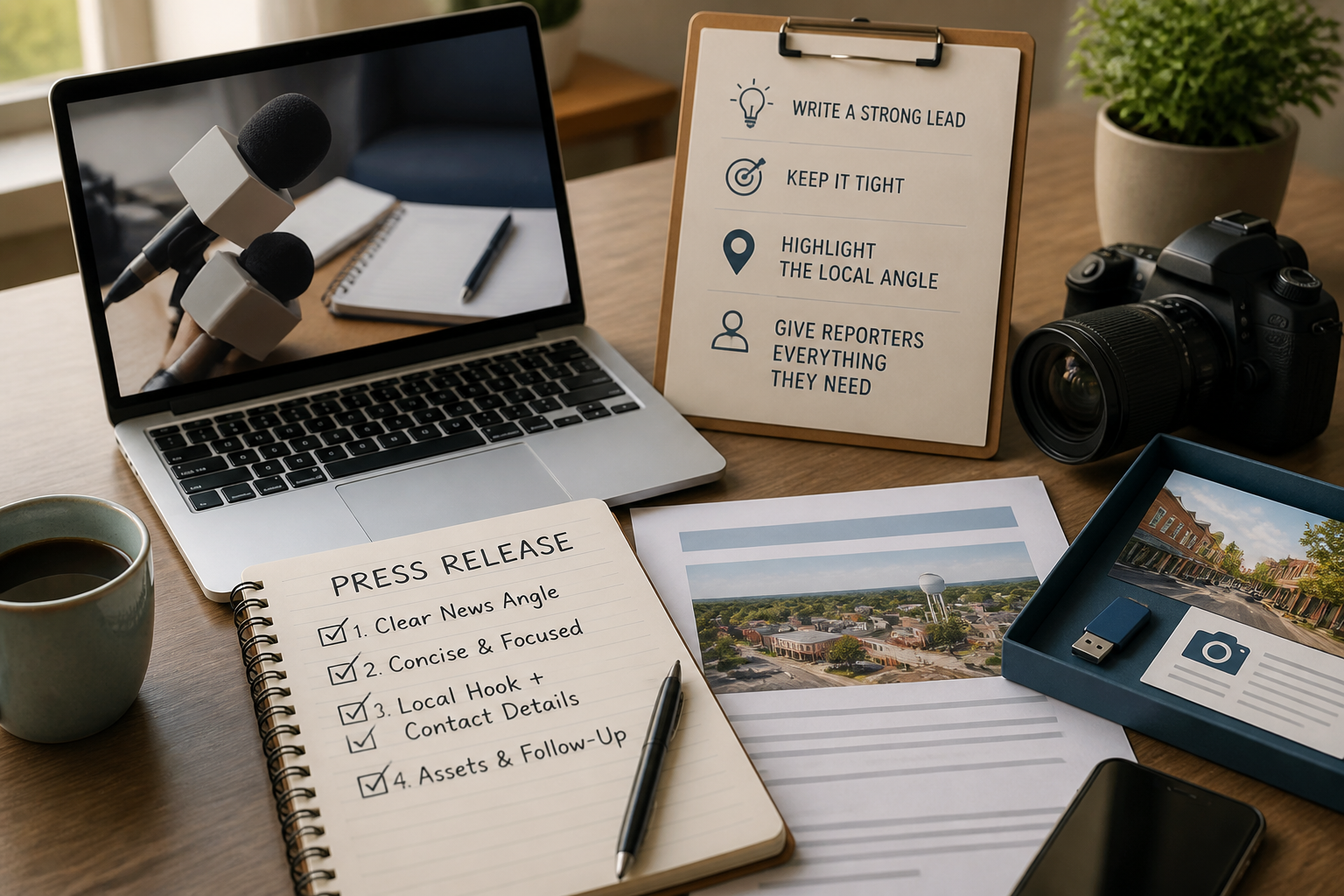
Write a clean lead, keep it tight, highlight the local angle, and give reporters everything they need. With a template and these fixes, you can draft a press release in 30 minutes that actually gets read. Now breathe, open a blank doc, and start with your best one‑sentence lead.