Home » Support and Guides » Build an Emergency Binder Fast
Assemble a Household Emergency Binder in 60 Minutes — and Which Pros to Line Up

Anna I
April 2, 2026
Build an Emergency Binder Fast
Surprising claim: you can build a usable household emergency binder in 60 minutes — and it will prevent hours of frantic searching when something goes wrong. Most people either overcomplicate the binder or never use it because it’s messy. With the right focus you’ll have a compact, reliable plan that helps you respond calmly.
5 quick tactical tips (and common mistakes to avoid)
Tip 1 — Start with a one-page index and three priority tabs
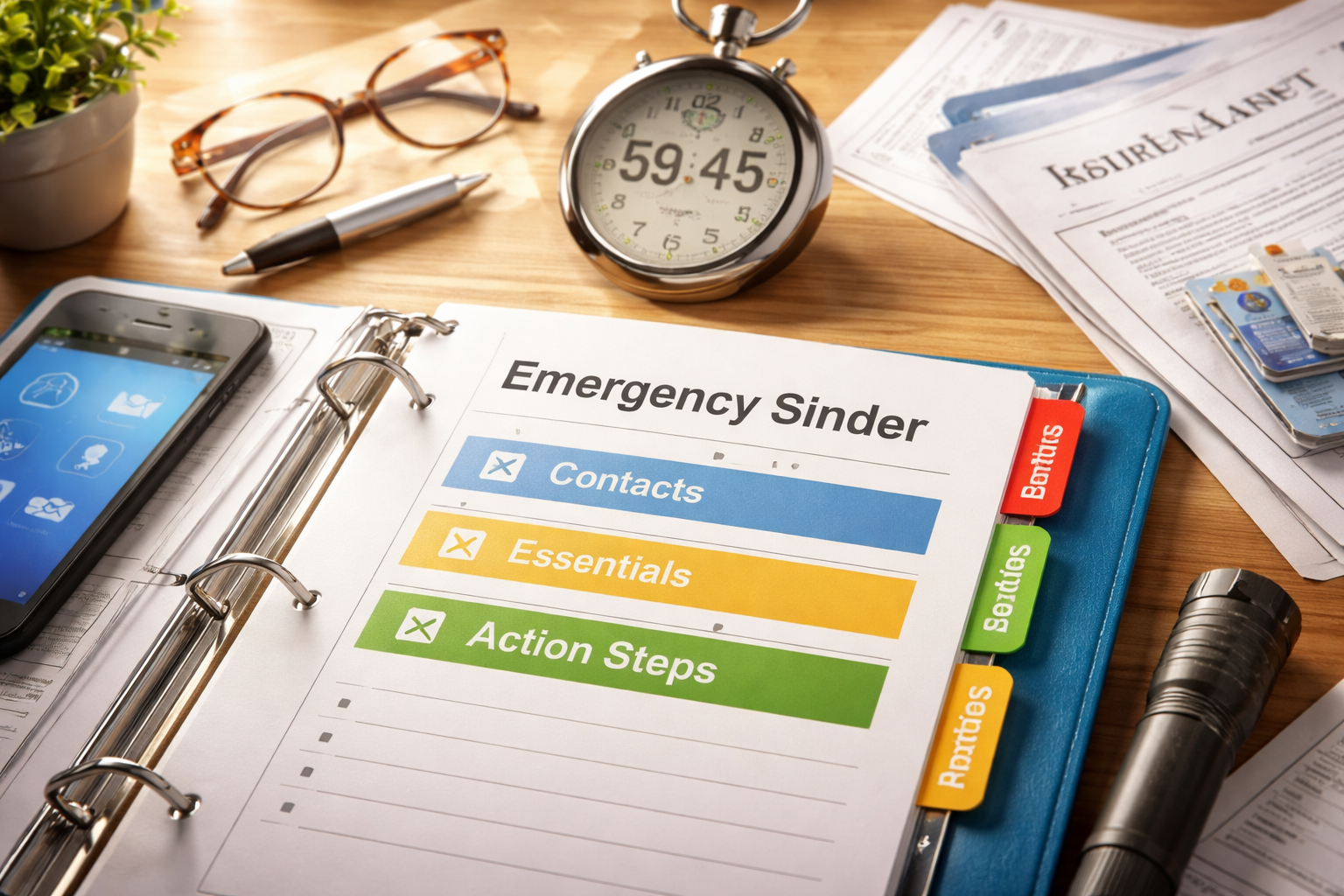
The common mistake: stuffing documents into random pockets. That makes the binder unusable under stress. Instead, create a one-page index and only three priority tabs: Contacts, Essentials (IDs, insurance, medical info), and Action Steps.
This keeps things findable. If you want help designing the index or printing tabs, a virtual assistant or organizer can assemble it fast.
Tip 2 — Keep only essentials, then scan to the cloud
The common mistake: copying every paper “just in case.” That creates clutter and slows you down. Limit the physical binder to must-have originals and summaries, and scan everything else to a secure cloud folder.
Ask for digital help from an IT freelancer who can scan, name files consistently, and set up permissions for family or staff.
Tip 3 — List specific pros and update contacts quarterly
The common mistake: generic lists or outdated phone numbers. Include named contacts and backup options: local plumber, electrician, locksmith, HVAC tech, family doctor, vet, insurance agent, and a trusted contractor.
Write short notes on availability (after-hours? weekend?) and assign roles so everyone knows who calls whom. Use a simple calendar reminder to check numbers every three months.
Tip 4 — Store two copies in two places
The common mistake: storing the binder where you can’t reach it during an emergency. Keep a physical copy in an easy spot at home and a digital copy accessible from the cloud. For small businesses, keep an additional copy off-site or with a key team member.
If you prefer, hire someone to courier a secure copy to a family member or to set up encrypted storage.
Tip 5 — Build a 5‑step action checklist and rehearse
The common mistake: having a binder no one knows how to use. Create a one-page checklist for the top three scenarios (power outage, water damage, medical emergency). Practice the steps once a year with household members or staff.
Role-play takes 10–15 minutes and reduces panic. A local event assistant or trainer can run a quick drill for you or your team.
If assembling this feels like too much to squeeze into an hour, you can outsource parts of the job. Find pros to scan documents, format your index, or compile emergency contact lists quickly on TASK4YOU. It’s an easy way to get trusted help without hunting providers yourself.
Finish strong: in one focused hour you can replace anxiety with a clear plan. Small business owners especially benefit from a binder that teammates can use when you’re not available. Start now, set a quarterly update on your calendar, and know you’ve cut down future chaos — one page at a time.